Treatment Guides
The New Self-Care: Why Aesthetics Are Becoming Routine Maintenance
Once shrouded in secrecy, aesthetic treatments are now being embraced by many women as a form of proactive self-care. We explore the shift from 'anti-ageing' to routine maintenance.
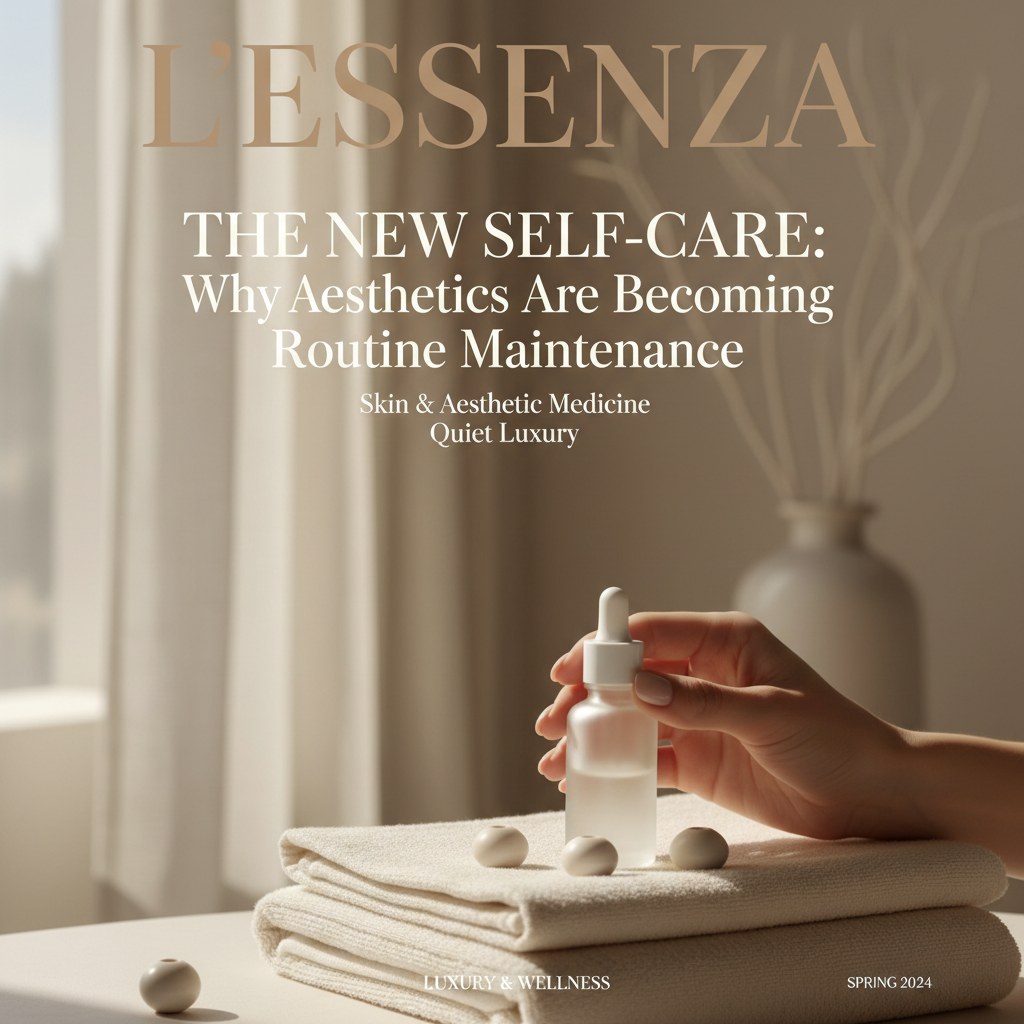
The New Self-Care: Why Aesthetics Are Becoming Routine Maintenance
There was a time, not so long ago, when confessing to any form of cosmetic treatment was done in hushed tones, if at all. It was a subject confined to the shadows, associated with drastic transformations and a certain sense of shame. Today, the narrative is quietly, but radically, changing. For a growing number of modern women, aesthetic treatments are no longer a secret indulgence but a considered part of their routine—as normal as a haircut, a gym membership, or a meticulous skincare regimen.
This is not a story about chasing an impossible ideal of youth, but about a fundamental shift in perspective. The conversation has moved from ‘anti-ageing’ to ‘proactive ageing’; from correction to connection. It’s about aligning the face we see in the mirror with the energy and vitality we feel within.
The Shift from Correction to Connection
Historically, cosmetic procedures were often seen as a last resort—a corrective measure to ‘fix’ the signs of ageing. The modern approach is far more nuanced and proactive. It’s less about turning back the clock and more about tending to your skin and appearance with consistency, just as you would any other aspect of your health and wellbeing.
This new philosophy treats the skin as an organ that benefits from regular, expert-led care. It prioritises long-term skin health, focusing on gradual, subtle enhancements that preserve individuality. The goal is not to look like a different person, but to feel like the most confident and refreshed version of yourself.
This reframing places aesthetics within the broader wellness landscape. If we invest in our physical fitness, our nutrition, and our mental health, why should caring for our skin—the body’s largest organ—be viewed any differently?
What “Routine Maintenance” Looks Like
When we speak of ‘routine maintenance’ in aesthetics, we are rarely talking about invasive surgery. Instead, the focus is on a portfolio of minimally-invasive treatments designed to maintain skin quality, prevent future damage, and address subtle changes over time.
These might include:
- Light and Laser Therapies: Treatments like IPL (Intense Pulsed Light) or fractional lasers can address pigmentation, improve skin texture, and stimulate collagen production with minimal downtime.
- Skin Peels: Medical-grade chemical peels are used to exfoliate the skin, revealing a brighter, more even complexion and improving the efficacy of your at-home skincare.
- Bioremodelling and Skin Boosters: Injectable treatments that use hyaluronic acid not to fill, but to deeply hydrate and stimulate the skin’s own regenerative processes, improving elasticity and glow from within.
- Judicious Use of Neuromodulators and Fillers: When administered by a skilled clinician, these are used for softening expression lines or restoring lost volume in a way that looks natural and respects the face’s unique anatomy.
The emphasis is on a ‘little and often’ approach, guided by a clinician who understands your long-term goals and develops a plan tailored to your skin, not a one-size-fits-all solution.
Breaking the Stigma Through Transparency
The move towards openness has been instrumental in destigmatising aesthetic treatments. As more women—both in the public eye and in our own circles—choose to speak candidly about their choices, the veil of secrecy lifts. This transparency fosters a more honest and supportive dialogue, transforming a taboo topic into a shared conversation about self-care and personal choice.
By reframing these treatments as a valid form of maintenance, women are reclaiming the narrative. The choice to have a treatment is no longer seen as a sign of insecurity, but as an act of personal investment and empowerment.
A Considered and Informed Approach
While this new openness is positive, it must be paired with caution and education. Aesthetic treatments are medical procedures that carry real risks, and the decision to pursue them should always be a considered one.
Finding a Qualified Practitioner: The single most important step is to seek out a medically qualified and experienced clinician. A responsible practitioner will conduct a thorough consultation, discuss your motivations, and explain the potential risks and benefits. They will be honest about what can be achieved and will not pressure you into a decision.
It’s a Personal Choice, Not a Mandate: The goal is to feel good in your own skin, not to conform to an external pressure or societal beauty standard. The most empowering choice is an informed one—and that includes the choice to do nothing at all.
As with any aspect of our wellbeing, the key is balance and intention. For many, integrating aesthetic treatments into their self-care routine is a way to invest in their long-term confidence and feel more at home in their skin. It’s a quiet evolution, transforming the way we think about ageing, beauty, and the art of looking after ourselves.
To understand which treatments may be suitable for your specific skin goals, we always recommend a thorough consultation with a qualified dermatologist or aesthetic clinician.
Information in this article is for educational purposes only and is not a substitute for a professional medical consultation. Please speak with a qualified practitioner about treatments suited to your individual needs.